By Bharat BagreePublished on
Rise
The Company That Defined the American Auto Industry
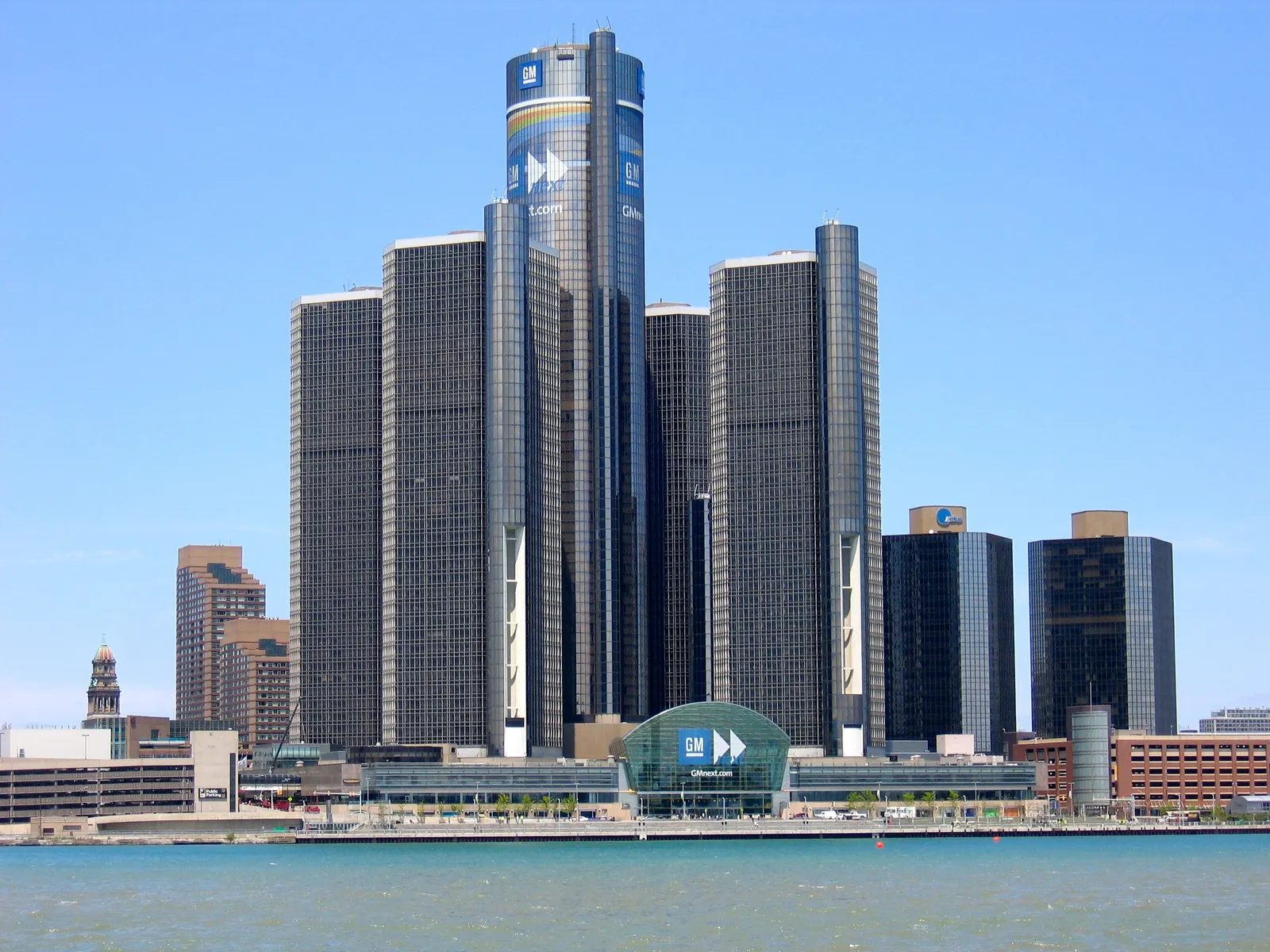
General Motors was founded in 1908 in Flint, Michigan, by William C. Durant, who built the company through a rapid series of acquisitions, bringing Buick, Cadillac, Oldsmobile, and other marques under a single corporate umbrella. This multi-brand structure, unusual for its time, let GM offer vehicles across nearly every price segment, a strategy that helped it become the largest automaker, and for a period the largest company of any kind, in the world.
For much of the twentieth century, GM’s scale, manufacturing capability, and diverse brand portfolio made it the industrial symbol of American economic strength, and its labor agreements with the United Auto Workers union became a template that shaped wage and benefit expectations across the broader American manufacturing sector.
Fall
Legacy Costs and a Portfolio Too Large to Manage
GM’s twentieth-century labor agreements, while historically significant achievements for organized labor, created a long-term financial obligation that became increasingly difficult to sustain: generous pension and retiree healthcare commitments that had to be funded regardless of how many vehicles the company was currently selling. As GM’s workforce aged and its active-employee-to-retiree ratio worsened over decades, these “legacy costs” became a structural burden that competitors without comparable historical obligations, particularly Japanese manufacturers building U.S. plants without the same inherited commitments, did not carry.
At the same time, GM’s sprawling brand portfolio — Chevrolet, Pontiac, Buick, Oldsmobile, Cadillac, GMC, Saturn, Hummer, and Saab at various points — created significant internal redundancy, with multiple brands often competing for overlapping customer segments and diluting marketing and engineering resources that could otherwise have been concentrated on fewer, stronger product lines.
Market share eroded steadily from the 1980s onward as Toyota, Honda, and other manufacturers built reputations for reliability and value that GM’s broader, more fragmented portfolio struggled to match consistently across every brand, leaving the company financially fragile well before the 2008 crisis provided the shock that made the underlying weakness impossible to ignore.
Crisis
The Largest Industrial Bankruptcy in U.S. History
The 2008 financial crisis collapsed U.S. auto sales industry-wide, and GM’s combination of high legacy costs and thin cash reserves left it particularly exposed. By late 2008, GM, alongside Ford and Chrysler, appealed to Congress for emergency financial assistance, a set of hearings that drew intense public and media criticism, including sharp scrutiny of the “Big Three” CEOs’ initial decision to travel to Washington on private jets to request aid.
As a condition of continued federal support in early 2009, the Obama administration’s auto industry task force required the removal of GM’s CEO, Rick Wagoner — an extraordinary degree of direct government involvement in a nominally private company’s leadership, reflecting how completely GM’s survival had become dependent on the terms of federal assistance rather than its own independent financial position.
On June 1, 2009, GM filed for Chapter 11 bankruptcy protection, the largest industrial bankruptcy in United States history at the time, backed by approximately $50 billion in financing from the U.S. Treasury under the Troubled Asset Relief Program (TARP) — a level of direct government financial support without precedent for a major American industrial company.
Turnaround
“New GM” in Forty Days
GM’s bankruptcy proceeding was structured to move unusually quickly given its scale: a new corporate entity, informally referred to as “New GM,” acquired the valuable operating assets of the bankrupt “Old GM” in approximately forty days, leaving behind the most burdensome legacy liabilities and discontinued brands in the prior entity, which was wound down separately.
As part of this restructuring, GM discontinued four brands entirely — Pontiac, Saturn, Hummer, and Saab — recognizing that a leaner portfolio focused on Chevrolet, Buick, GMC, and Cadillac could be managed and marketed far more efficiently than the sprawling structure that had preceded it. GM also closed a substantial number of dealerships as part of reducing its distribution network to a scale better matched to its post-crisis sales volume.
The speed of the restructuring, unusual for a bankruptcy of this size and complexity, reflected the extensive advance preparation by the Treasury-led auto task force and GM’s own management, who had structured much of the asset transfer and brand discontinuation plan before the formal filing, minimizing the operational disruption and uncertainty that a more protracted bankruptcy process would have caused with customers, suppliers, and employees.
Strategy
A Smaller, More Disciplined Company by Design
GM’s post-bankruptcy strategy centered on right-sizing the company’s cost structure and brand portfolio to match a realistic, sustainable level of North American market share, rather than the far larger share GM had historically held decades earlier. This meant accepting a structurally smaller company as a deliberate strategic choice, rather than continuing to operate infrastructure and brand commitments sized for a market position GM no longer held.
The restructuring also addressed the legacy cost burden directly, through negotiated changes to retiree healthcare obligations and other benefit structures as part of the bankruptcy process, reducing a structural cost disadvantage that had compounded for decades relative to competitors with younger workforces and fewer historical obligations.
New leadership, including Chairman and CEO Ed Whitacre, a former AT&T executive brought in from outside the auto industry to lead the post-bankruptcy “New GM,” emphasized faster decision-making and a reduced bureaucratic layer between engineering, manufacturing, and executive leadership, aiming to shorten the slow product development cycles that had contributed to GM losing ground to more nimble competitors.
Leadership
Government-Directed Leadership Change
The removal of CEO Rick Wagoner as a precondition for continued federal assistance represented an unusual form of leadership transition: rather than a board-driven or shareholder-driven change, it was mandated by the government entity providing the emergency financing GM required to remain operational, reflecting the scale of federal leverage over the company at that moment in its history.
Fritz Henderson served as interim CEO through the bankruptcy filing itself, before Ed Whitacre, brought in from outside the automotive industry with a background leading AT&T, took over as Chairman and CEO of the newly restructured company, a leadership choice that echoed a broader pattern across several turnarounds in this collection: bringing in an outsider specifically to make difficult structural decisions without the constraints of internal industry relationships and assumptions.
The federal government’s role as GM’s majority shareholder following the bankruptcy — informally dubbed “Government Motors” by critics — created an unusual governance dynamic, with the Treasury Department’s auto task force retaining significant influence over major strategic decisions during the initial post-bankruptcy period, even as the company’s operational leadership worked to demonstrate GM could again operate as an independent, commercially driven enterprise.
Innovation
Faster Decisions, Fewer Layers
GM’s post-bankruptcy innovations were organizational and financial as much as technological: flattening decision-making layers between engineering and executive leadership, and imposing far greater capital discipline on new vehicle programs than the pre-bankruptcy company’s slower, more consensus-driven development process had allowed.
The bankruptcy restructuring itself, executed in roughly forty days for a company of GM’s scale and complexity, represented a significant innovation in how a distressed industrial giant could be reorganized quickly with substantial government coordination — a template that, while controversial, demonstrated that even an extraordinarily large and complex bankruptcy could be resolved with unusual speed given sufficient advance preparation and government-backed financing.
GM also used the post-bankruptcy period to accelerate investment in newer vehicle technologies, including electrification programs that built on the Chevrolet Volt, launched around the same period, positioning the restructured company to compete in an automotive industry increasingly shaped by fuel efficiency standards and emerging electric vehicle competition.
Financial Recovery
From Bankruptcy to the Largest IPO in U.S. History
GM’s financial recovery, in terms of returning to operational profitability, was notably fast following the 2009 bankruptcy restructuring. In November 2010, GM completed an initial public offering that raised approximately $23.1 billion, at the time the largest IPO in United States history, allowing the U.S. Treasury to begin recovering a portion of its investment in the company through the sale of its shares.
The federal government continued selling down its remaining GM ownership over the following years, formally exiting its stake entirely by 2013. However, the ultimate financial outcome for U.S. taxpayers was a net loss on the overall investment; various government and independent assessments estimated the shortfall between the roughly $50 billion committed and the amounts recovered through GM’s IPO and subsequent share sales at approximately $10 billion, a gap that remained a point of ongoing political and economic debate about the bailout’s overall value.
Operationally, GM returned to sustained profitability in the years following the bankruptcy, with a substantially reduced brand portfolio, a leaner dealer network, and a lower legacy cost structure than the pre-bankruptcy company had carried, positioning the restructured company on a more financially sustainable footing than it had operated on for decades prior to the crisis.
Lessons
What GM’s Turnaround Still Teaches
GM’s bankruptcy and recovery illustrate how structural cost obligations accumulated gradually over decades — in this case, pension and retiree healthcare commitments — can eventually overwhelm a company’s ability to compete, even when no single year’s decisions appear obviously reckless in isolation. The crisis was the delayed consequence of commitments made across many years, not a single strategic failure.
The second lesson concerns the value, and the controversy, of extensive government-coordinated restructuring for a company deemed too economically significant to fail in an uncontrolled manner. The speed of GM’s bankruptcy resolution, roughly forty days for one of the largest industrial bankruptcies in history, depended heavily on the scale of advance government coordination and financing, a level of support unavailable to most distressed companies.
The third lesson is about the honest accounting of a bailout’s true cost. While GM’s operational recovery and return to an IPO were genuine successes, the federal government’s investment was not fully recovered, underscoring that even a successful operational turnaround does not necessarily mean the rescue’s original capital was ever made whole — an important distinction between a company’s survival and its investors’, or in this case taxpayers’, full financial recovery.